


Hello all, I hope you had a wonderful Christmas break and new year. To punctuate my interviews, I’ll also be writing field reports - aggregates of culture, data, and tips on the Third Oikos. I hope you enjoy.

Culture in the Third Oikos
Community & Atomization: Always Go to The Funeral (Deirdre Sullivan, 8.8.05 for NPR)
On what it takes to fight atomization:
“’Always go to the funeral’ means that I have to do the right thing when I really, really don’t feel like it. I have to remind myself of it when I could make some small gesture, but I don’t really have to and I definitely don’t want to. I’m talking about those things that represent only inconvenience to me, but the world to the other guy. You know, the painfully under-attended birthday party. The hospital visit during happy hour. The Shiva call for one of my ex’s uncles. In my humdrum life, the daily battle hasn’t been good versus evil. It’s hardly so epic. Most days, my real battle is doing good versus doing nothing. In going to funerals, I’ve come to believe that while I wait to make a grand heroic gesture, I should just stick to the small inconveniences that let me share in life’s inevitable, occasional calamity.”
Technology & Society: Identifying Negative Externalities of Technology for Society (John Coogan , 11.10.25 for TBPN)
Great to see technology insiders advocating for nuanced critique of emerging technology, particularly of the social downsides:
‘You need to understand moral discernment, AI safety - these things are linked but not exactly the same. Last year there was the big debate about fast-takeoffs, AI doom, paperclipping scenarios but this year I feel like we’ve been much more focused on much less sci-fi, doomsday scenarios. So: GPT Psychosis drives a friend crazy? That’s real. “Romantic companions” crashing the birth rate? That feels like something we should have a discussion about. Infinite scroll vertical AI? It’s brain-rotting children… Those are all real problems, they deserve both discussion in the public square and also real work inside the AI labs, and I don’t think we should throw [the label] “decel” at someone who is identifying a negative externality of a new technology.
Technology & Society: On Friction-Maxxing ( Kathryn Jezer-Morton, 1.8.26 for The Cut)
While the narrativization of this essay is dramatized (I don’t think people should stop using LLMs), I do think intentionally choosing where to maintain friction as it gets easier to avoid, will be the theme of the next decade. In an era of infinitely generative tools (ahem, Claude Code), choosing our tools and their affordances intentionally will be a high value skill.
And some suggestions for general life, and building community:
“Are you ready for more friction? Invite people over to your house without cleaning it all the way up. Babysit for someone who needs a night out — convince this person, who will surely resist for friction-aversion reasons, to let you come over and chill at their house for a few hours. If you have kids, bring them with you. Send your kids to run small errands for you, comfortable in the knowledge that they will probably do a bad or incomplete job.”
Data on the Third Oikos
Commutes & Childcare: Why Commuting is Uniquely Challenging for Moms (Stephanie H. Murray, 12.6.25 in The Atlantic)
In which Stephanie makes the point that historically women gravitated towards jobs that made them compatible with childcare, and that “In postindustrial societies, many of the requirements Brown cited for making work compatible with child-rearing have become less relevant … Distance from home—which of course affects commute time—may play a larger role in employment-based gender inequality than ever.”
I noted in the definitional Third Oikos essay that remote work’s availability to parents is one of the defining traits of the Third Oikos, perhaps the interesting inverse is that in light of more abundant jobs with no commute, there is a higher penalty for those that still do have a commute.
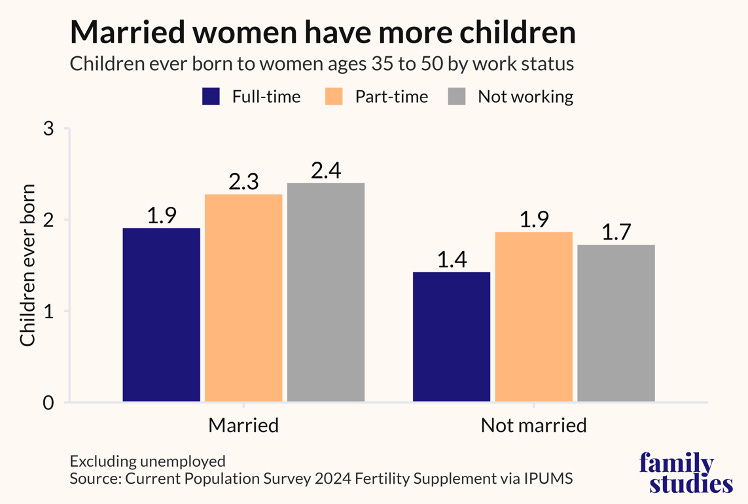
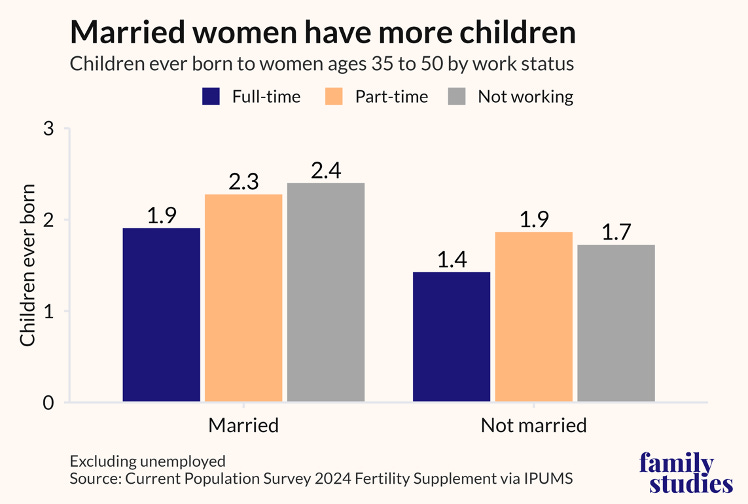
Fertility Rates, Motherhood, & Work Status: Married Women Have More Children, Part-Time Moms & Stay at Home Moms Especially ( Brad Wilcox, Maria Baer, & Lyman Stone , 12.29.25 for The Institute for Family Studies)
Fertility Rates & Housing: Family-Friendly Apartments ( Bobby Fijan & Lyman Stone, 9.25.25 for The Institute for Family Studies)
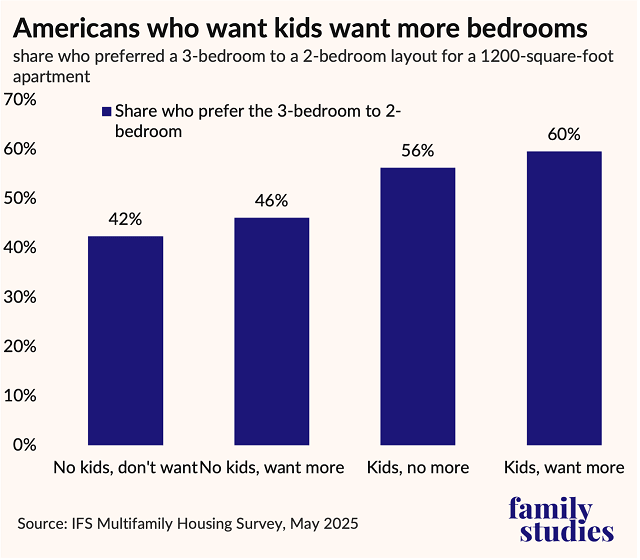
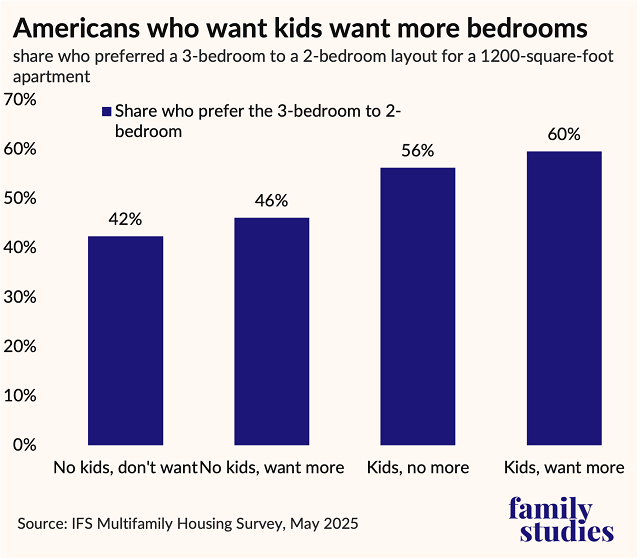
An detailed report on all number of details about state of apartments for young families, and what young families desire in housing including that, “apartments are a growing share of new housing but are getting less family friendly: smaller, with fewer bedrooms,”
and “Family-friendly units are more cost-effective than developers and investors realize. One reason these units are underprovided is that developers use erroneous assumptions about vacancy rates that ignore the fact that smaller units have higher vacancy rates, higher turnover, and higher rates of budget-constrained residents who may miss payments.”
Tips from the Third Oikos -
LLMS & Household Operations: I’m very interested in the highest yield general applications of LLMs, and more recently, Claude Code (a new AI tool release that is able to coordinate tasks between all of the apps on your computer) and use cases for homemaking and household operations. Some interesting early adoptions I’ve seen:
Kelsey Piper of The Argument, details creating a home-brew educational phonics app for her kids
Claude used to automate pattern planning, colorwork placement, and automatic size scaling for a complex sweater one woman hand knit (”It’s scaled down two days of work!”)
Creating a daily brief via info from iMessage, Whatsapp, Gmail, and GCal
And Simon Sarris, a father who often works from home doing web development, noting that the nature of Claude Code helps him utilize the frequent, small blocks of time he has while working from home to do his digital work more effectively.
Bonus Round:
Community & Hospitality: Benjamin Laufer is building a restaurant in Brooklyn focused on getting strangers to eat together, called Garnet, opening in early 2026.
I am eternally encouraged by the ways I see young people looking to intentionally change the culture around community and hospitality, often seeking to move their relationship building offline, or creatively transition online friendships to deeper, in person ones. Benjamin is building a restaurant in Brooklyn that’s focused on getting strangers to eat together. I was privileged to eat one of Ben’s excellent home cooked meals at a dinner in 2021, so I’m excited to try more of his food!
I hope you enjoyed this digest & please do send examples in the comments of the Third Oikos you see out in the wild.