



Can the internet enable a more hands on life?
Simon lives a life that‘s so beautiful it almost looks unattainable. But he thinks it could be for you too.
You may have seen Simon’s essays about building a house from scratch, Simi’s hand-made clothing, or the family garden that children always seem to be learning to play and work within.
He wasn’t born into a family of woodworkers of even gifted with social ease - but he decided both skills were desirable and cultivated them. I wanted to understand how Simon built this life from Scratch. For this reason, I reached out to Simon for a conversation about the Third Oikos, and how at this moment in time, the internet can paradoxically enable a more physical, hands-on life.
This is part one of a two-part interview.
Nicole: I would love to hear about how you grew up. Was young Simon in an environment a lot like your environment now?
Simon: I grew up in Nashua, New Hampshire, a very small city which is one town over from where I live now. I get asked a lot when I moved to New Hampshire, but I’ve always lived here. I was raised in an 1840s house, close to downtown, and grew up with two brothers. I went to Catholic school for 12 years, though both of my parents are very not religious.
I was a very obedient child. I get the sense that I was mostly left alone during my childhood. My dad was often busy, and my mom was usually dealing with one of my two brothers who seemed to need a lot more attention than I did. I didn’t mind this – my biggest childhood memory is wanting to be alone and read by myself. Our house was big enough that you could usually squirrel away somewhere.
My house now is comparatively small and we’re all on top of each other, so I really look forward to adding onto it later. I was not an outdoorsy child and my parents were not outdoorsy people, this came to me later in life. I enjoyed childhood, but It felt like it was just me there. I could summarize my childhood as: quiet, and alone, but in an oddly satisfying way.
Nicole: My husband’s family, one of the first modifications they made to their home was reading nooks. They had five kids and they built small inset, cushioned chair areas into the kitchen, and there has always been one kid sitting with a book while anything else was going on. I would love to have similar spaces in our home.
Simon: Simi and I talk about nookiness in design a lot. We consider it one of the shortcomings of the house we designed and live in, basically we had to leave out interesting architectural complexity for budgetary reasons. So our current house is not super nooky — it’s really just a simple rectangle.
My childhood home captures a lot more of my imagination than just saying it was an 1840s house. It was a house that was big when it was built, and then it was added onto. It was owned by a prominent family that was dying out, and around the 1940s (I think) it was just one young woman living there. In the 1980s, when my father bought it, it was that same woman, her butler, and nobody else in this giant house.
The house has a few passageways so that a butler could access many rooms without having to go through the main house. So there are doors that go to long, narrow hallways that you would never build today, and you could squirrel in and out of different places. The kitchen was set up so that servants used it and not the people who owned the house, with a hallway-like aspect.
Nicole: Intertangled with your entry into homebuilding, is Simi, your lovely wife. How did you meet?
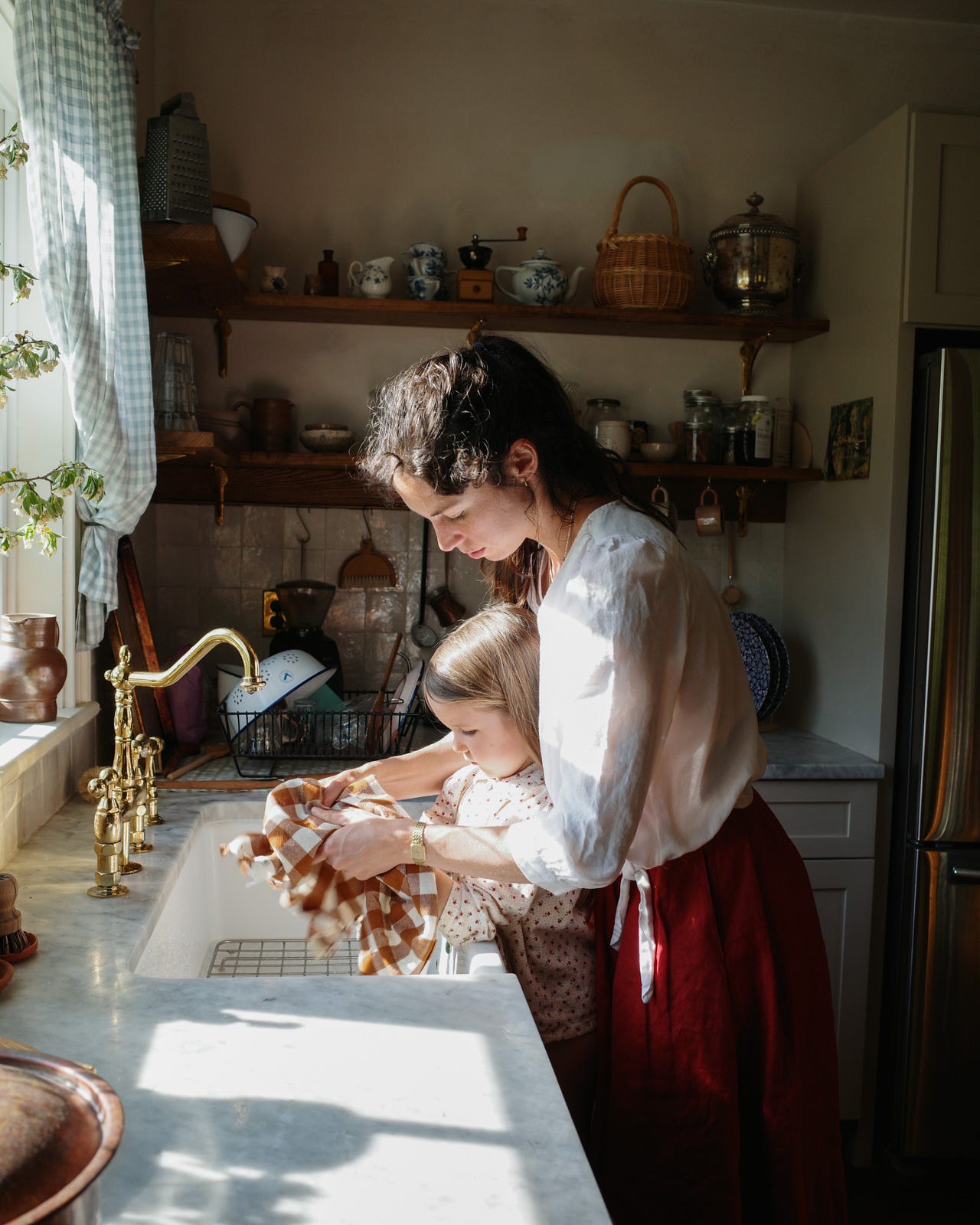
Simon: It’s a short story but a long process. I was a very shy person and had not talked to many other people throughout my childhood. I went to an engineering college, and met a lot of people who were about as shy as me, and it hit me then that I couldn’t end up this shy forever. It felt like, “I have to get good at being social,” even if I hated it. After college, although I was quite addicted to coffee, I didn’t have any means of making coffee in my house. Instead I forced myself to walk to a café and say hello to another human, try to be genial, and ask them for coffee at least once a day. That had to be the bare minimum, because otherwise I could actually walk into work, work for eight hours, and sometimes never even talk to another person, as my coworkers were often remote even in the 2010s at my small company. Around this time I would also say “yes” to pretty much any social engagement, party, etc.
I ended up meeting a lot of people from this particular café. I met many future roommates. I met the owners of the café, we actually started a liquor tasting club together. And a mutual friend introduced me to Simi. I don’t really remember the initial encounter, but after a while we connected on Facebook and started talking online. Since the early days of forums I’ve always loved talking online, at length through text, so to me it feels very natural for friendships to develop through that medium.
Simi and I were friends for a while in this mostly online way, which only really materialized as a physical friendship slowly, which snowballed into spending more and more time together. Eventually I fell for her, and then it was reciprocal.
Nicole: In person relationships furthered by online reconnections are great. Santi and I met each other in person in middle school, but I slid into his Twitter DMs in high school, and we talked online for a very long time before we got together, because he was in college far away. I also see the through-lines with your meeting house website.
Simon: I love the idea of people finding and being found. I want people to get hitched. I want people to meet up and talk to each other more, and remember that when you talk to people online, they’re not some random blob of pixels — they’re a person that exists in the world, and you should treat them like that. You should meet up. Some people think it’s silly to talk to someone a lot online before you date them. Some people think it’s silly to be friends before you date somebody. But these have always felt so natural to me.
Nicole: Two of the things I’m very curious about are: how we should use the internet to encourage in-real-life connection, and how the networked life can make localism possible. Your sense of, “I need to go and show up places repeatedly in person,” with the goal of meeting people in real life — I hope people can take that away from this conversation and replicate it. I’m worried about my internet friends who are very eligible, but don’t give themselves surface area to meet people and be romanced.
Simon: Anything you can do to increase that surface area is good. That’s why I wrote “Breadcrumbs,” which I still think is one of the most important concepts: if you’re spending a lot of time online, you need to find a way to make sure other people can find you. You need to write in such a way that if other people do find you, they like you and know who you are. If you only ever go online to talk about politics and complain, then you’re wasting your shot at that connection.
Building a House and a Home
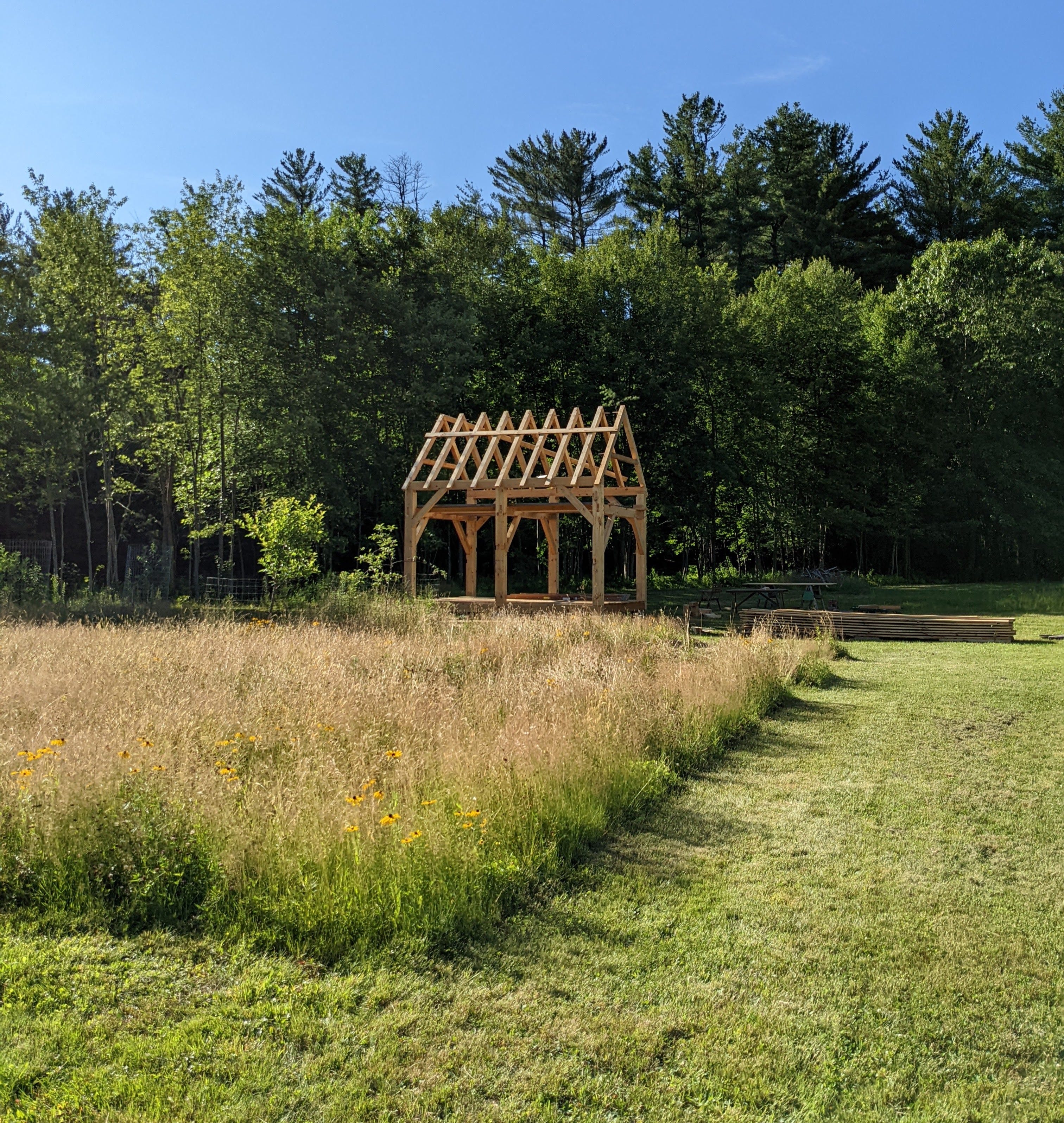
Nicole: You and Simi live in this house that you built together. Did you have to convince Simi to enter into this project with you?
Simon: Before we got married, I was looking for a house to buy. At some point it became, “We are looking for a house to buy.” We’re very affected by where we live: by the way light comes into rooms, the noise outside, the view in all four directions, what we can walk to, how it feels to be outside. A lot of people have a house as a place to keep their car, then they go to other places. We really like home. It has to be good, and it has to be something you can make good.
I was mostly looking for old houses in Nashua, my hometown. Everything was too expensive, not on the market, or too much work. We started looking in towns around Nashua, and Amherst is one town over. The original plan was that we would buy something old and cheap and then fix it up, learn to renovate, and get good at it. Old houses are built so much better than new houses, not necessarily in quality of materials, but in the sense of using light correctly. New houses assume you’re going to turn the lights on from 8am onwards. We want to have them off as much as possible, and when it’s time to turn them on, we want them to be very low. It was very hard to find anything that was not old that respected light.
We put in offers on two old houses and had to back out of both because of problems that would require more money than we had. In one, the barn was sliding off a foundation. In the other, all the masonry work and the roof needed to be redone. It’s possible we could have taken those on ultimately. But we backed out of both and got frustrated. We decided: why don’t we buy land and build an old house?
It happened that land was for sale within walking distance of Amherst Village, which is a small town center with a library, a general store, churches and some schools. The kind of place that is picturesque enough that presidential hopefuls like to be photographed in the 4th of July parades. It seemed very surprising to me that nobody wanted this land, which seemed perfect. We found out it had been on the market for almost a year. Nobody wanted it. The spot where you could site a house on the land was not very good, but there was another potential siting spot if you got a waiver, because it was ten feet too close to some wetlands for you to be allowed to put the house on this beautiful little hill.
We thought, “Why don’t we just buy it and see if we can get the waiver?” We asked for a waiver on the basis that if we had a special kind of septic tank with an aeration chamber, it’s not so bad to be ten feet too close to the wetlands. The town said that was just fine. Maybe there was this amount of inertia that the standard builder didn’t want to overcome, to make a beautiful house on one of the last remaining buildable spots next to a very cherished historic village.
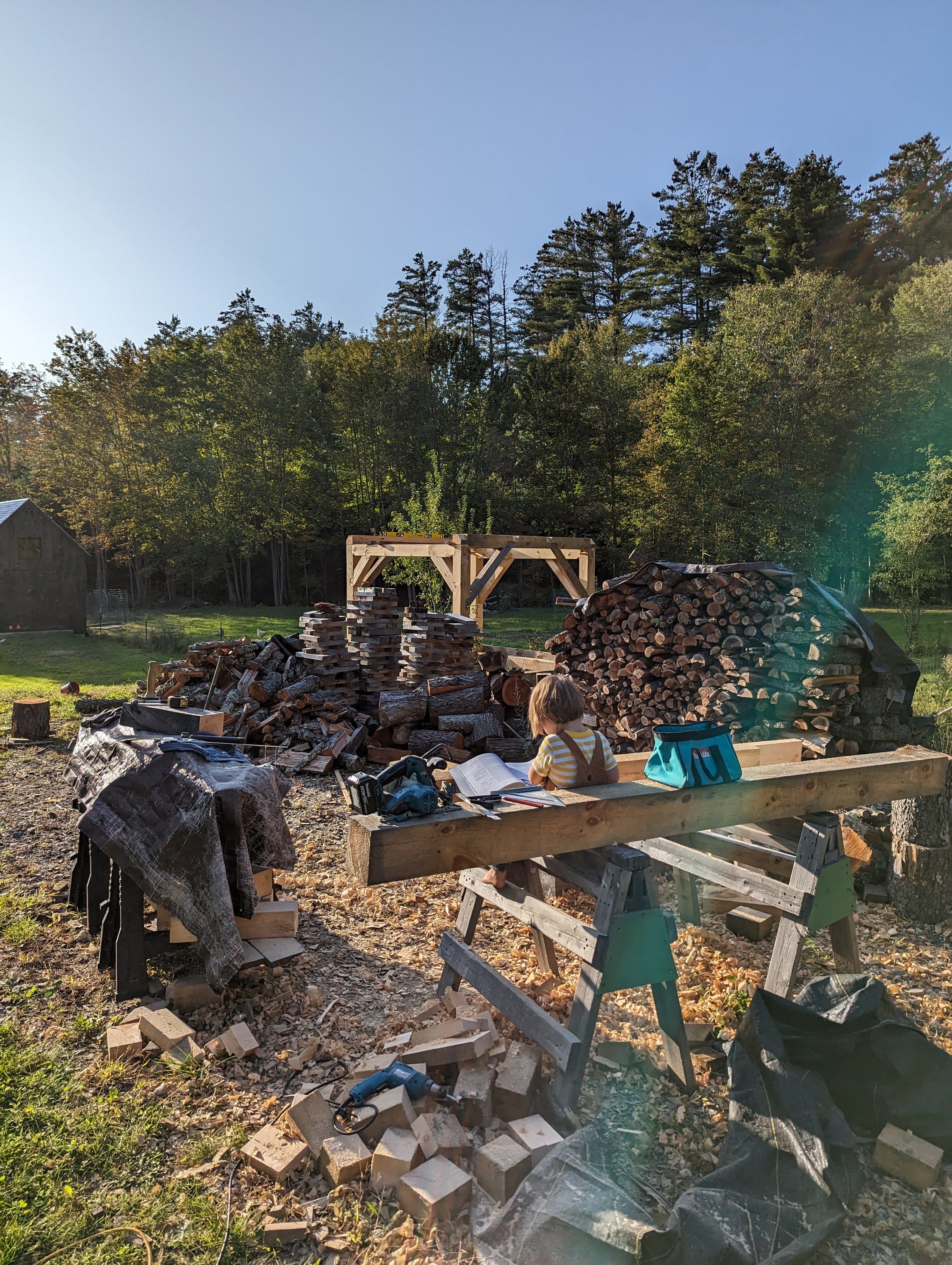
Nicole: Have you followed the American Housing Corporation?
Simon: I like it. There’s this disjoint problem where, unless you have a massive amount of money and 200 acres, it’s very hard to make a place that’s great from scratch. It’s almost never been done since medieval times — to have a planned town that looks beautiful. It used to happen because of certain important forces: “This is the amount of place we can wall off; everybody get inside. I decree that the market will be here, the church will be here, and everywhere else are houses or shops — as many as you can get, please stay inside the walls.” That worked very well in some urbanist ways, but because there aren’t barbarians anymore, we don’t do that too much. When we build walls, they’re gated communities.
It’s hard to build something beautiful unless you want to buy the 200 acres and plan it out from scratch, and most people are unwilling to do that. The California Forever people or the Esmeralda people might succeed. The American Housing Corporation will probably succeed in making beautiful housing, but I assume it will be here and there — a nice house or set of houses — not the same thing as a village.
Nicole: My husband and I also grew up in the same area. For us it was downstream of the extended Christian community we grew up in. Partially because of that, I would like there to be a village in many senses: beautiful homes, a beautiful walkable community, and also a collective culture that everyone feels invested in. That part is very difficult to engineer.
Simon: Even here, everyone would love it if there were a beautiful café in town that served beautiful food and excellent coffee, and there’s not one. If someone could make it, that would be great. The auto garage is actually up for sale right now, and I passively dream of converting it into a cafe – though in reality I’m overloaded with projects – because it’s very romantic to be able to give that to a town. But it doesn’t happen.
People see special places and assume they’ve always been that way, or that it’s obvious to make them. But it’s either less obvious or more difficult than everyone wants to admit.
Making Things with Computers
Nicole: You’re a software engineer, but I’d love to hear more about what you do for paid work and what drew you into this position — and learnings you transfer from this work into your family.
Simon: In high school, programming felt like a great thing to study since it meant I could create without having to gather any resources first. But I don’t have anyone in my family that does software, and I didn’t have what you might call role models. When I told my dad I wanted to major in Computer Science, he thought it was a horrible idea. He said something like, “Look at CNN Business News. They say that because of outsourcing there’s not going to be any programmers in the future.” Apparently they say that every decade. He was concerned that it was a crazy bad idea to become a programmer, and that I should be a dentist like he was.
The summer before high school I had to buy the TI-83 calculator for classes, and it came with a comically large manual. I thought, “I should read this — how could a calculator have a manual so large?” Part of it was how to program the calculator with a very basic programming language. So I read it and accidentally taught myself programming. When programming classes came up in high school I was ready for them.
My company hires interns from high school — anyone who’s good at AP computer science. We (Northwoods Software) ask local teachers: “If you have any good students, send them over to interview.” My AP computer science teacher one day asked me if I wanted a job, and I cautiously assented. I had never written a resume before. I think I typed my SAT score and my IQ on a piece of paper with my name, which they probably thought was very funny. I became an intern, and worked there almost every summer and winter of college.
After college I was too bashful to go look for jobs out west like everybody else. I really just wanted to stay in New Hampshire. Northwoods felt they needed to make a JavaScript version of their product, and they knew I was graduating, so they asked me if I wanted a full-time job after college. So I took this modest software job in New Hampshire, which was definitely at the expense of career growth and money. I didn’t really care about money back then. That was probably a mistake in terms of long-term thinking.
What’s happened since then is that we made the company pretty prosperous. I was the first intern ever hired full-time, but after me we hired several more. Except for the original founders, high school was the start of the pipeline for all the people who currently work at the company.
People sometimes ask me, “Do you have any career advice?” But it’s difficult to do that well, since I still have the job I had in high school and just kept working there until I became a shareholder in the company. That’s not typical. Though this job has given me the impression that the low-hanging fruit for doing something different in your career is probably pretty plentiful.
I believe a lot of choices I made changed the destiny of my company quite a bit, and I think that most employees probably have a lot more power to make their company better or more interesting, if they’re willing to put in the effort. I get the impression that I think serious change is more possible than anyone else seems to think it is.
Trying to bring this back to family life: working in a very small company requires a large amount of self-governance from every employee. We don’t have KPIs or OKRs or a ticketing system to make sure everyone is doing work. We have paychecks, but if you stop working, the paychecks stop coming. It’s not like a large company where you could hide for a year. Here if you do nothing, the company dies. That skill of self-governance is what it takes to be good at a small company, and also to be good as a stay-at-home mom, and to raise children well. Virtue is probably the most important part of education, and self-governance part of that. The corporate world has all these tools and roles to make sure that employees are doing the work, because they may not do it otherwise. We don’t feel that way about work or life. There’s an ethos in there that I think is very helpful.
Nicole: I completely agree. There’s something very powerful about realizing you can be agentic both in your paid work life as well as in your home and community.
At what point did you write your HTML book?
Simon: A couple of years out of college. I was very fascinated with HTML Canvas at the time. I was on Stack Overflow writing answers to Canvas questions — I answered about 13% of all Canvas questions ever asked on Stack Overflow, just as an obsessive hobby. Pearson emailed me out of the blue and said, “We found your account. Do you want to write a book about HTML5?” I said, “No, but I’d write a book about just the Canvas part.” But they ended up convincing me to write a larger book after all.
It was a little excruciating. I would get home from work, eat dinner, and then work on this book until late at night, trying to meet a deadline to get this book out so that it was still relevant by the time it would be published, because technology moves fast.
The book got good reviews, with nearly every reviewer praising the canvas section. But I had no online following back then, so there was nobody I could really market it towards. Because of that it was somewhat a mistake for me to write the book. Today if I wrote a book, it’d be a much wiser idea. It’s harder to justify economically if you’re totally unknown.
Nicole: I had no idea that Pearson recruited on Stack Overflow!
Simon: In the early 2010s, it was hard to find out who was the expert on what and where to find them, at least for newer technologies. Today Twitter (X dot com) would make that much easier.
Localism

Nicole: You’ve touched on your commitment to knowing local people, like your librarians and the regulars at your local coffee shop. What does your local community look like?
Simon: It’s probably the part of our life that’s the most undeveloped right now. Especially with three babies and lots of projects, the easiest thing to drop is socialization outside of the home. Simi and I know a family nearby that we’re very fond of, with children our children’s ages. If they lived in town, we would see them probably every single day. But they’re far enough that we have to organize it, which is too bad. I wouldn’t say we have a big community in town, we do have lots of acquaintances, but the people we like the most are pretty far away. The remoteness of our house from highly ambitious city people means we don’t see as many people as we might otherwise. Of course my family still lives in the next town over. My mom comes over once a week.
On the other hand, Simi and I always have a multiplicity of projects going. Even if we did live near many more people, we might not see them as much, just because at this stage of life we’re either raising babies or trying to do projects. There’s likely a future time where we spend a lot more time being social than right now.
Nicole: There are upsides and downsides to city versus town living. The fluidity of people in and out of the city is one of the downsides. We have a library a three-minute walk away, but they are an ever-rotating cast.
Simon: That is certainly one upside of living here. Though, because the average age of New Hampshire is so high, Lu knows a lot of older people who adore him — but they won’t be around forever.
Simi would walk to the village every day when she was pregnant with Lu. The first time Simi and I walked into the village with a baby stroller, two old ladies ran out of their houses to congratulate us. They were quietly watching Simi get more and more pregnant. One lady gave Lu his first stuffed toy. But she couldn’t live on her own anymore, so she had to move over an hour away. As the children grow up, a lot of these people are going to be retiring from the town jobs or moving away.
Life in the Third Oikos
Bringing Apprenticeship Back into the Home
Nicole: One of the main interests of this publication is the open question of how our new economy could bring production, and even a sense of localism, back into the home — potentially enabled by new technology. I’m curious what uses of technology serve your household well.
Simon: I know you mentioned LLMs earlier. As much as I love Claude — it’s an incredible tool for programming — we use very little of anything like that. I’m technology-shy in many ways, I’m not fond of gadgets around the house especially. But I think it’s incredible today that you can learn everything from home. Youtube alone is an endlessly impressive resource to have.
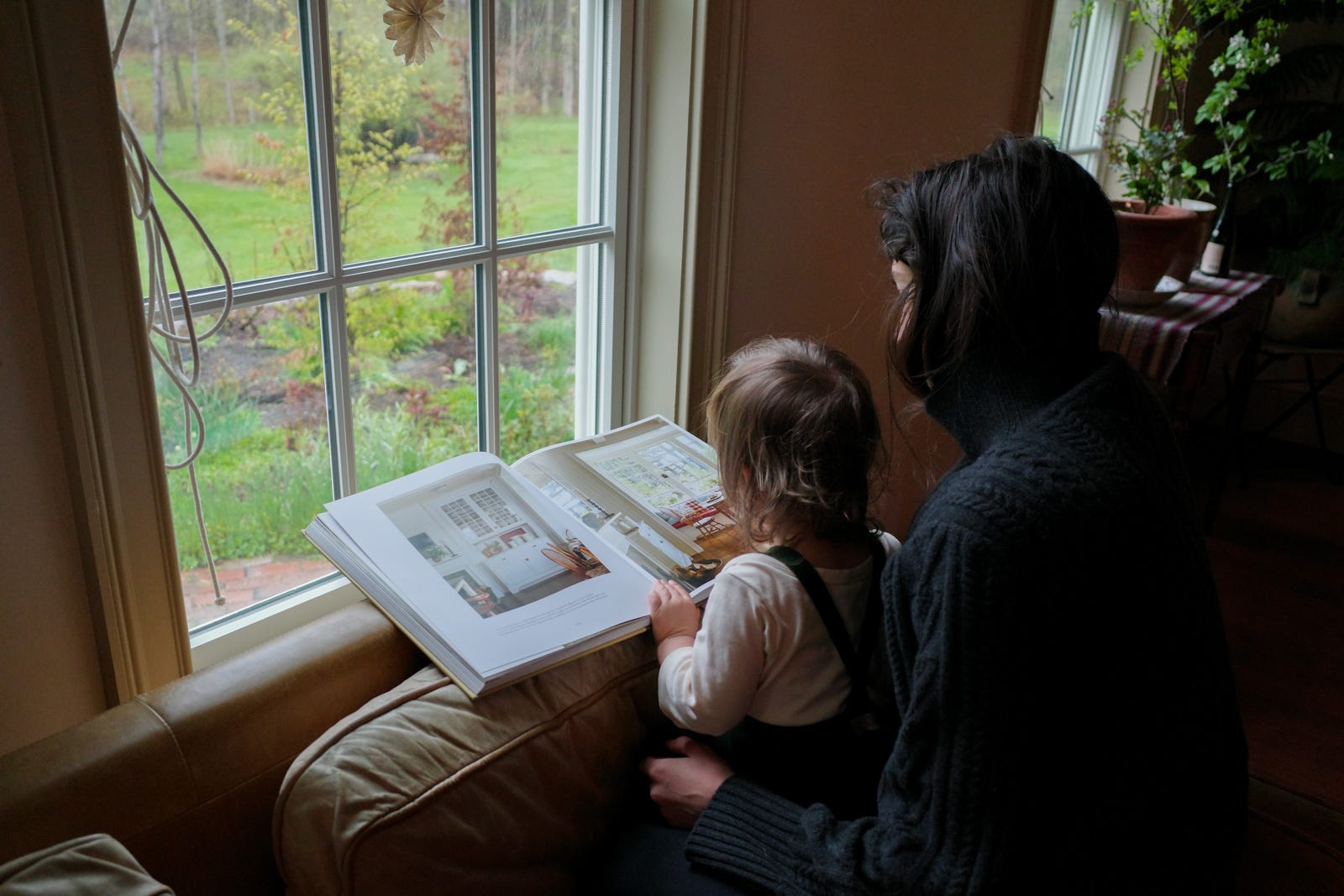
If we didn’t have Pinterest, for example, designing our home would have been much harder. It’s nice to have a visual search engine to explore and hone in on what you might like. In the early days, this was much easier than getting books from the library. It’s hard to develop your taste without quantity — you need to see and sift through and think about a large amount of imagery. The internet makes that much easier. There are wells of discovery within social networks and niche publications. More than ever.
Although, now that we do have a strong sense of what we like, we’re turning to books a lot more. Technology like Pinterest or Instagram can help but they can also get you stuck into repetitive feedback loops. You have to use such technology very carefully so that you keep exploring, and it doesn’t start shaping and steering you. I worry about this with people and LLMs.
Technology that Enables Making
Simon: It’s very hard to DIY anything without tutorials. Books are no substitute for YouTube, where a guy down on his hands and knees is showing you, “This is how you finish the floor. This is how you set a nail if it pops up.” You can become a pro-amateur at anything now, compared to when our parents were young. There’s no substitute for that. The world today is so good if you want to make anything yourself. If you want to do pottery in your home, there are dozens of options for getting a plug-in kiln that you can just buy online. You can get any kind of clay, any kind of tools, for all sorts of hobbies. All of this stuff is way more available than it used to be.
It’s probably not the easiest time to sell handmade items. But making things with your hands, on your own, has never been easier. As soon as you have a little disposable income, the number of hobbies open to you is practically infinite. Much more than you’ll ever have time for.
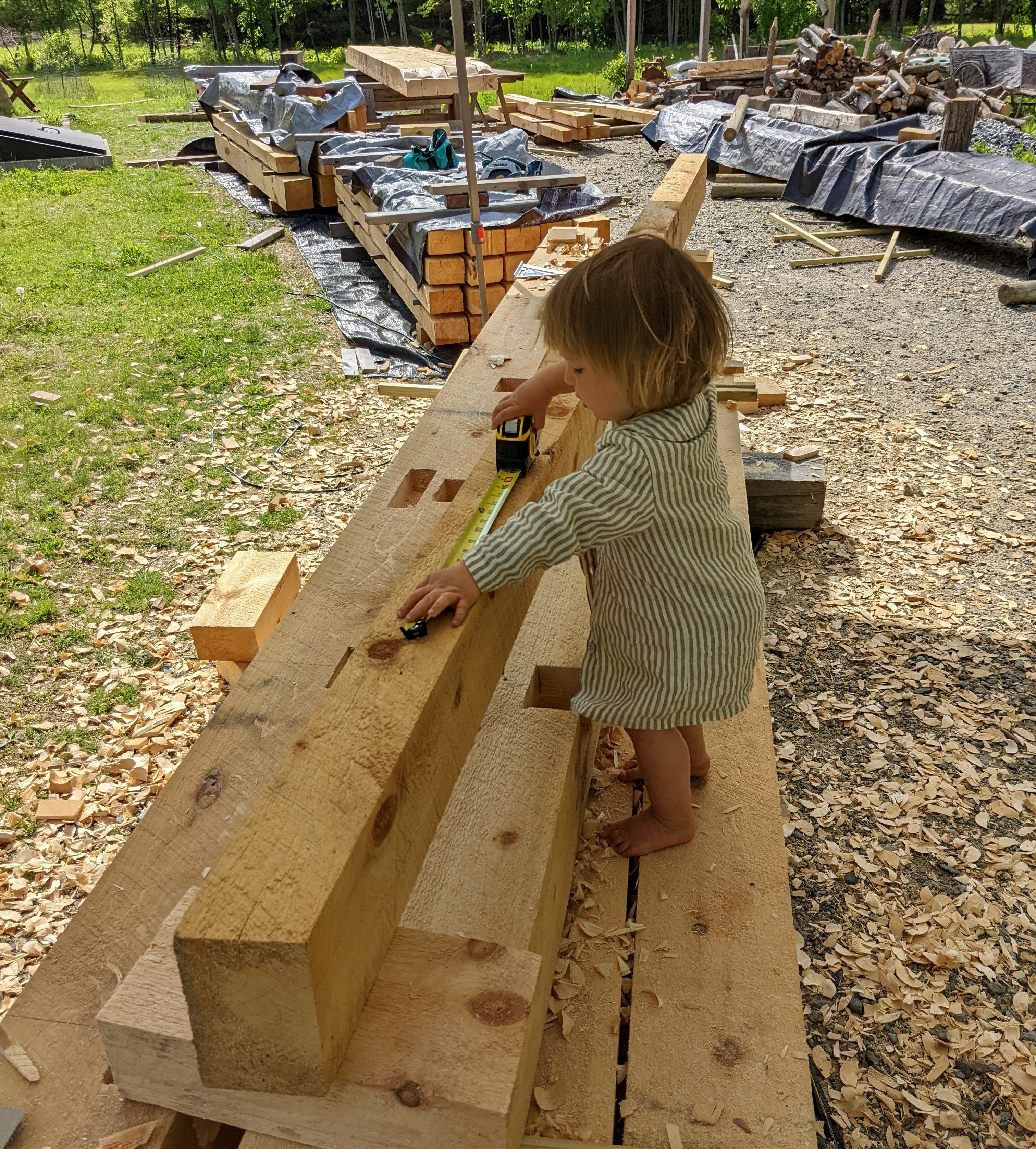
Nicole: Raising children has certainly made me think about this even more than I did before. My husband, Santi, and I try to practice seeing what we can find within our home library before we search things, and bringing our toddler into this process. On the other hand, I struggle to find excellent books about a lot of the things I’m looking to fix in our household. I’m curious where in this stack you sit.
Simon: Some people say that the downside of LLMs is that they are generally going to give you the aggregate “average” answer. In programming, you won’t necessarily get the best practices — you’ll likely get the most common practices. However, there are a lot of issues where the most common answer is also the best answer. I don’t use them that much, but if I knew less, I would be happy to rely on them somewhat often.
Nicole: Asking “what is a question where the average or common answer is desirable?” is a very good filtering question for when using an LLM is a good idea.
I’ve also found that referencing bodies of work or research — telling an LLM to draw heavily on X, Y, and Z — is very helpful. But with DIY stuff I struggle to anchor on what those references would be.
Simon: There’s definitely downsides to learning that way. If you want to learn about something specific, it’s much better if you go to Wikipedia, click through to a lot of other pages, and learn a lot of other adjacent stuff that you would never have known if you’d just been given an answer. There’s a massive benefit to the people who don’t reach for LLMs, but read around the problem. Maybe you thought something was Art Deco, but really it’s Eastlake. If you asked an LLM only about Art Deco, and never searched the web normally for pictures of what you were looking at, you might never come across the Eastlake movement.
Nicole: I feel pretty strongly that having a sense of how you want to learn, far before you ever open an LLM, is the goal.
Advice: Take Yourself Seriously and Show Up
Nicole: You have an ongoing project, Meeting House, that helps people meet in real life from digital connections, people often ask you about romance during your online “office hours”, and your self-imposed daily coffee shop ritual helped you find a wife. What advice do you have for people looking to find a spouse?
Simon: I didn’t take my life seriously enough for a decade starting in high school. I spent too much time not doing anything I really wanted to do, because I didn’t spend very much time thinking about what I wanted to do. Maybe the answer to your first or second question — that I didn’t have a plan when I was a child of what I wanted to be when I grew up — points to that. I didn’t think about it enough. If I had taken my life seriously sooner, I probably would have had a better time from my teens into my early twenties. I happened to have a nice time anyway, and a great outcome, but I think I’m uncommon there.
All of my advice really boils down to a wish to get people to take their own lives a little more seriously. Or a lot more seriously – so that they can get more out of life. For a lot of people, that does happen to be finding a spouse, but it’s not just that. Some of the feedback I got on Meeting House is very charming — someone told me that they found a person that is now their tennis partner, and they play tennis together a lot. That’s great. It’s a reminder that your online presence is part of real life and what you do matters, and you should take that seriously.
Finding a spouse is a subset of finding and being found, and you should try to think hard about how, exactly, you can be found. And if someone discovers you, if they’d like what they found. You should want to be the kind of person where, if there’s a party, and you walk in the door, everybody cheers — “Simon is here, this is so great!” — and that should be exactly as true with your online presence. People should be delighted that you showed up. Will they be?
Nicole: I like that. Is there anything else you want to say to readers?
Simon: If you want to do something, you should try to shorten the path between thinking about it and acting on it. You might think, “It would be so cool if I did hand pottery.” If you do, you should search for a class immediately, click sign up, and spend the money — before you’re even sure you can make it that week. You must make an effort to make the rest of your life route around your real desires. A lot of problems in life seem to come from a thin film of inertia spread over everything. But you can pierce it.
So never stop at the thinking stage, a good life begins with deliberate effort. This is the moral of many fairy tales. Not magic, not thinking, but effort.
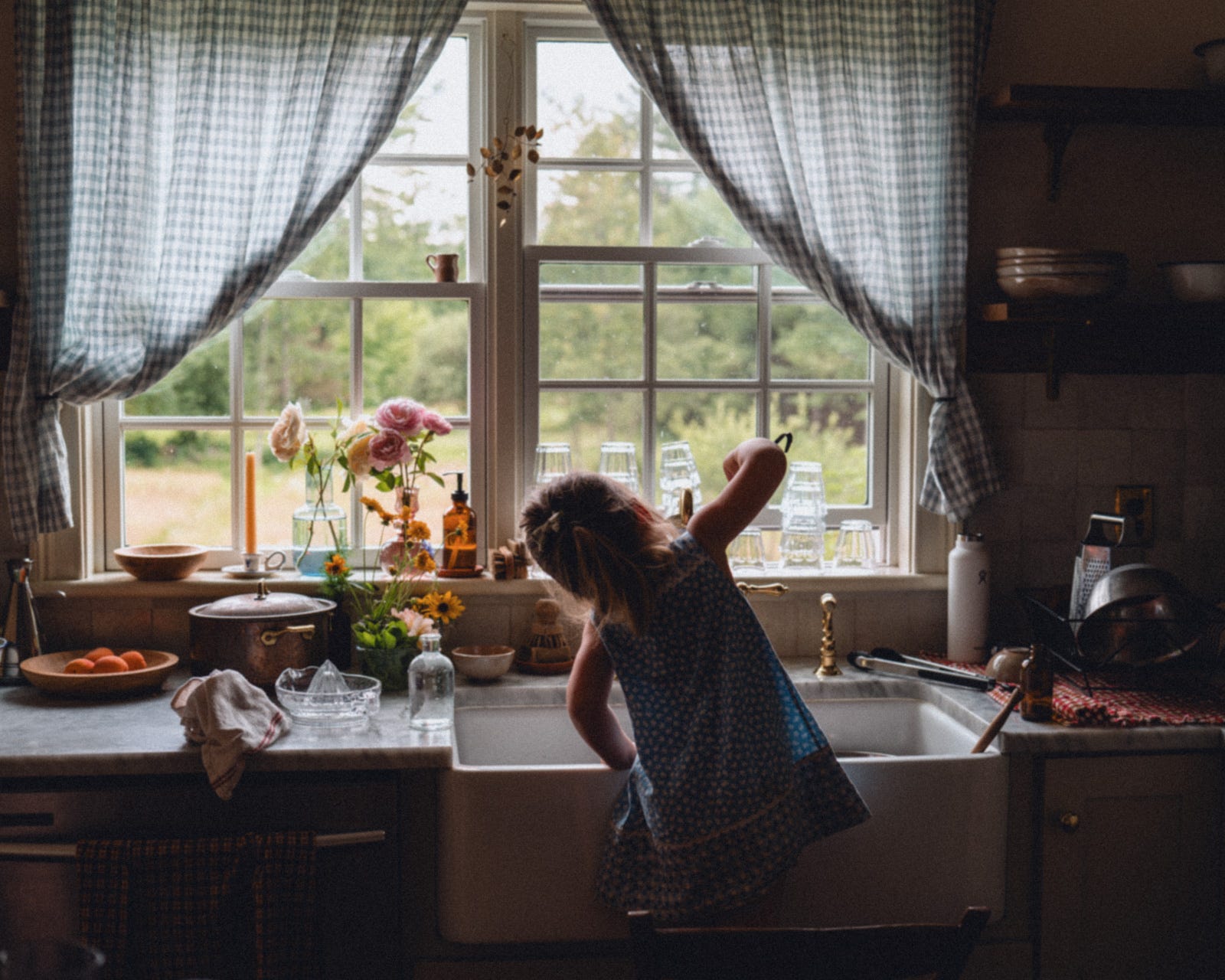

This is part one of a two-part interview with Simon. You can find part two here.
This interview series is made possible by the Foundation for American Innovation and the Institute for Family Studies.
Thank you to Harry Fletcher Wood for his edits.
I would love to hear more about how he built a house that fits three kids and a wife by himself. Did he hire help, or literally do it piece by piece with his own hands? It seems extremely hard (but he is a beast for doing it)
I'm building my own place in Vermont along similar lines to Simon's house. I appreciated reading through some of his notes on the design and implementation process after finding this interview. In our case, we bought an antique timber frame from Connecticut and we're in the process of restoring and putting it up on our land in central Vermont. But the design will be similar to Simon's: also a 'new old house.'